

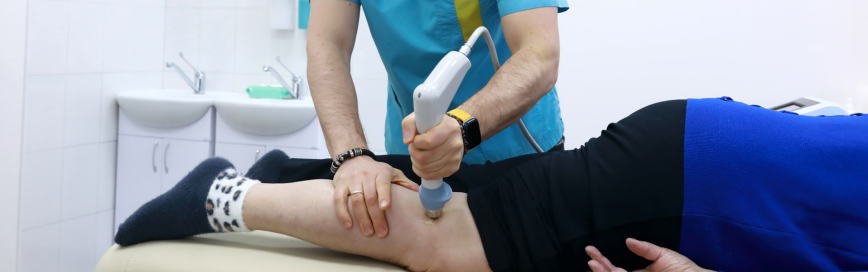
Knee pain can mess up everything — from walking and climbing stairs to being active at work or your favourite sport. At KeelePhysio, we treat many patients with knee pain that doesn’t improve with rest, stretching, or traditional therapy.
A treatment that’s quickly gaining internet popularity for nagging knee problems is Shockwave therapy—it’s a non-invasive approach that targets damaged tissues to promote healing and reduce pain. But who is it actually suitable for? Here, we explain in detail what Shockwave Therapy is and who it might benefit.
What Is Shockwave Therapy?
The mechanism delivers controlled acoustic (sound) waves to a concentrated area of the knee. These waves help:
- Improve blood flow
- Reduce local pain sensitivity
- Stimulate tissue repair
- Disburse calcification or adhesion
- Improve mobility and function
It is formulated for chronic or persistent pain, especially when conventional treatments have failed to achieve the results you’re seeking.
Who Can Benefit From Shockwave Therapy for Knee Pain?
1. People with Chronic Knee Tendon Pain
Shockwave Therapy has also been successful with patients who have chronic tendon irritation around the knee joint. Conditions include:
- Patellar tendinopathy (“jumper’s knee”)
- Quadriceps tendon issues
- Pes anserine tendinopathy
If your tendon pain elicits a stabbing sensation during activity and is stiff afterward, this therapy may be helpful.
2. Individuals with Patellofemoral Pain Syndrome
This condition, also known as “runner’s knee,” can cause pain around or behind the kneecap. Shockwave Therapy can offer relief by (among other things) reducing pain and optimizing tissue health (especially when combined with specific physiotherapy exercises).
3. Patients with Osteoarthritis–Related Knee Pain
Although Shockwave Therapy doesn’t cure arthritis, it can potentially:
- Reduce pain sensitivity
- Ease stiffness
- Support mobility
- Improve knee function
This can be beneficial for patients who wish to avoid invasive procedures until a later date, when they are planning or have scheduled other treatments, such as preventive care and non-surgical skin rejuvenation.
4. Athletes with Overuse Injuries
Overuse from sports such as running, volleyball, basketball and cycling can result in chronic knee pain. Shockwave Therapy may:
- Support faster recovery
- Improve tissue resilience
- Reduce recurring flare-ups
It’s particularly beneficial when incorporated with strengthening and biomechanical correction.
5. Patients Whose Pain Has Not Improved With Other Treatments
If you’ve tried:
- Rest
- Bracing
- Anti-inflammatory strategies
- Massage
- Standard physiotherapy
And you still can’t get rid of that nagging knee pain, Shockwave Therapy is now a non-surgical option that has the potential to kick-start a process of chronic inflammation and lack of circulation.
Is This Shockwave Therapy Right for You?
Shockwave Therapy is not ideal for everyone, and results depend on the condition and an individual’s overall health. Here at KeelePhysio, we evaluate your knee, discuss what’s going on with it, and see whether this aligns with the other pieces of your treatment puzzle.
Final Thoughts
Shockwave Therapy can be an excellent treatment option for chronic knee pain in athletes, weekend warriors or really anyone dealing with nagging tendon or joint pain. This, when used in conjunction with specialist physiotherapy, can help restore movement, reduce pain, and support long-term recovery.
When knee pain stops you in your tracks, KeelePhysio is the answer. We can assess your situation and develop an individualized treatment plan to help you move comfortably once more.